

The Power of Tahajjud Prayer
Have you ever felt a deep longing to connect with Allah (SWT) in the stillness of the night?
The Tahajjud prayer, also known as the “Late Night Prayer,” is one of the most spiritually uplifting acts of worship in Islam.
It is a voluntary prayer performed after Isha and before Fajr, preferably in the last third of the night when Allah’s mercy descends.
This article will explore all about Tahajjud with the Guide of Quran & Hadith as References
- – The meaning and significance of Tahajjud in the Quran and Hadith
- – The immense benefits of praying at night
- – A step-by-step guide on how to perform Tahajjud
- – Tips to wake up for Tahajjud consistently
Let’s dive into this beautiful Sunnah of the Prophet Muhammad (ﷺ) and unlock its blessings!
What is Tahajjud Prayer?
Tahajjud comes from the Arabic root “hajada,” meaning “to stay awake at night.” It refers to the special nafl (voluntary) prayer that Muslims offer after waking up from sleep.
Unlike the five obligatory prayers, Tahajjud is supererogatory (mustahabb), meaning it’s highly recommended but not compulsory.
The Prophet Muhammad (ﷺ) consistently performed it and encouraged his followers to do the same.
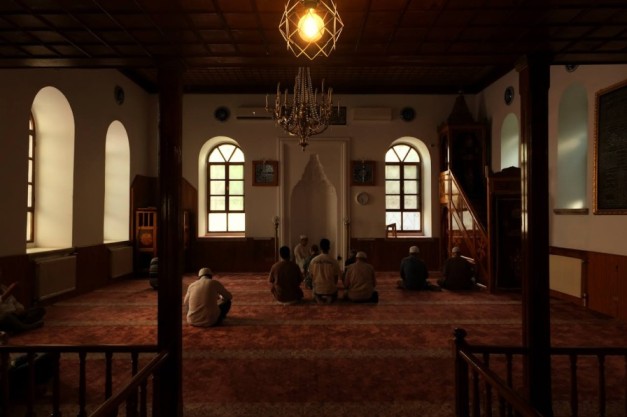
Tahajjud in the Quran
Allah (SWT) praises those who pray at night in several verses:
“They arise from [their] beds; they supplicate their Lord in fear and aspiration, and from what We have provided them, they spend.” (Quran 32:16) “And during the night, wake up for Salah (prayer) with it (the Quran), as an additional prayer for you. It may be that your Lord will raise you to a praised station.” (Quran 17:79)
These verses highlight the spiritual rank of those who sacrifice sleep to worship Allah.
Tahajjud in Hadith
The Prophet (ﷺ) said:
“The best prayer after the obligatory prayers is the night prayer.”
(Sahih Muslim 1163)
He also emphasized its importance for forgiveness and closeness to Allah:
“Our Lord descends to the lowest heaven in the last third of the night and says: ‘Who is calling upon Me that I may answer him? Who is asking from Me that I may give him? Who is seeking My forgiveness that I may forgive him?’” (Sahih Bukhari 1145)
This Hadith alone should motivate us to wake up for Tahajjud!
Why Should You Pray Tahajjud? 7 Powerful Benefits
1. Closeness to Allah – Tahajjud is a private conversation with your Creator.
2. Dua Acceptance – The last third of the night is a prime time for supplications.
3. Forgiveness of Sins – The Prophet (ﷺ) said night prayers erase sins.
4. Inner Peace & Relief from Stress – Tahajjud brings tranquility.
5. Increased Barakah (Blessings) in Life – Allah rewards night worshippers abundantly.
6. Protection from Evil – Regular Tahajjud strengthens faith and guards against Shaytan.
7. Higher Status in Jannah – The Quran promises a “praised station” for those who pray Tahajjud.
How to Perform Tahajjud Prayer: Simple Step-by-Step Guide
Step 1: Intention (Niyyah)
– Make a sincere intention in your heart to pray Tahajjud for Allah’s pleasure.
– There’s no need to say it out loud.
Step 2: Wake Up in the Last Third of the Night
– The best time for Tahajjud is after midnight, preferably in the last third of the night (about 1-1.5 hours before Fajr).
– If waking up is difficult, sleep early and set an alarm.
Step 3: Perform Wudu (Ablution)
– Cleanse yourself as you would for any other prayer.
Step 4: Pray 2, 4, 6, or 8 Rakats (Units of Prayer)
– Tahajjud can be prayed in pairs of 2 rakats, with a final Witr prayer (1 or 3 rakats.
– The Prophet (ﷺ) usually prayed 8 rakats (4 sets of 2) followed by Witr.
Step 5: Recite Long or Short Surahs
– You can recite any Surahs, but longer recitation is better if possible.
– Common Surahs: Al-Kafirun (109), Al-Ikhlas (112), Al-Falaq (113), An-Nas (114).
Step 6: Make Heartfelt Dua (Supplication)
– Pour your heart out to Allah. Ask for forgiveness, guidance, and blessings.
The Prophet (ﷺ) said: "The closest a servant is to his Lord is during the last part of the night, so if you can be among those who remember Allah at that time, then do so." (Tirmidhi 3579)
Step 7: End with Witr Prayer
– Conclude your Tahajjud with 1 or 3 rakats of Witr.
5 Practical Tips to Wake Up for Tahajjud Consistently
- 1. Sleep Early – Avoid late-night distractions.
- 2. Make Dua Before Sleeping – Ask Allah to wake you up for Tahajjud.
- 3. Keep Water Near Your Bed – Splashing water helps you wake up.
- 4. Use an Alarm (Far from Bed) – Forces you to get up to turn it off.
- 5. Start Small – Begin with 2 rakats and gradually increase.
Frequently Asked Questions (FAQs) About Tahajjud
1. Can I pray Tahajjud before sleeping?
No, Tahajjud is prayed after waking up from sleep.
2. What if I miss Tahajjud? Can I pray it later?
Yes, you can pray Qiyam al-Layl (night prayer) anytime before Fajr, but the best time is the last third of the night.
3. Do I need to recite long Surahs?
No, even short Surahs are acceptable. The key is sincerity.
4. Can women pray Tahajjud during menstruation?
Women cannot perform Salah during menstruation, but they can make dhikr and dua.
Final Thoughts: Make Tahajjud a Habit
Tahajjud is a gift from Allah a time when He listens closely to His servants. Even if you start with just 2 rakats, the key is consistency. The Prophet (ﷺ) said:
“The most beloved deed to Allah is the most consistent, even if it is small.”
(Sahih Bukhari 6464)
So, take the first step tonight. Wake up, stand before Allah, and experience the peace and power of Tahajjud!
Quick Question
Did you find this guide helpful? Share it with others to spread the blessings of Tahajjud!
Do you pray Tahajjud regularly? Share your experiences in the comments below!
For Halal Business Listing Visit and Sign Up on Muslimee.com


